
SCAPHOID FRACTURES
Dr. Cohen is well versed in non-operative and surgical care of Scaphoid Fractures.
-
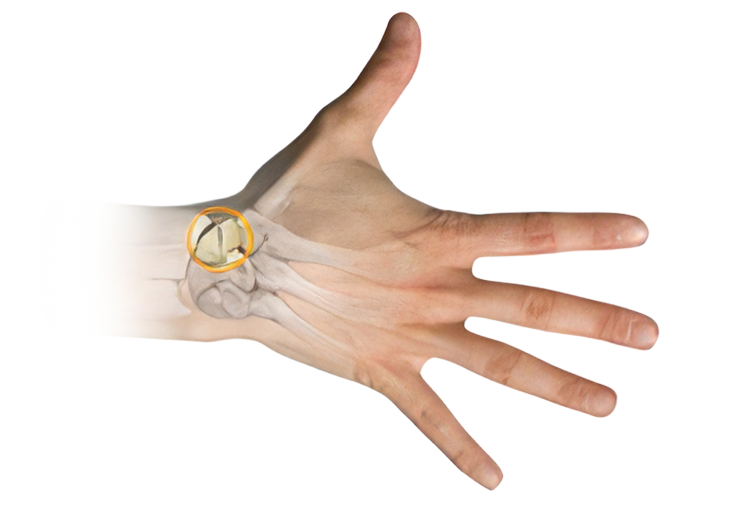
A scaphoid fracture is a break in the scaphoid, one of the eight small carpal bones of the wrist. It is the most commonly broken bone in the wrist, and because the scaphoid has a limited blood supply, it can be slow to heal and is sometimes missed on early X-rays.
The scaphoid sits between the bones of the hand and the two long bones of the forearm, on the thumb side of the wrist, just below the base of the thumb. Roughly the size and shape of a cashew, it helps connect the two rows of wrist bones and plays an important role in normal wrist motion and stability.
Most scaphoid fractures happen during a fall. When we fall, we instinctively put a hand out to catch ourselves, and landing hard on the palm forces the wrist backward - a position that leaves the scaphoid vulnerable to breaking. Anyone can be injured this way, but it's especially common in people who play sports or stay active, such as skateboarding, cycling, football, and snowboarding. High-energy impacts like car accidents can cause it as well.
The scaphoid's limited blood supply is what makes this injury different from many other broken bones. Blood enters the scaphoid from one end and travels back through the bone, so a fracture can interrupt that flow. This slows healing and, in some cases, can cause part of the bone to lose its blood supply. It also means a scaphoid fracture doesn't always heal on its own - particularly when treatment is delayed - and a break that fails to heal can gradually affect how the wrist works over time. This is why prompt evaluation matters, even when the injury seems minor.
-
The most common signs of a scaphoid fracture include:
Pain and tenderness on the thumb side of the wrist
Tenderness in the "anatomic snuffbox," the small hollow at the base of the thumb
Pain when gripping, pinching, or moving the wrist
Mild swelling
Unlike most broken bones, a fractured scaphoid often isn't obvious right away, which is why it's so frequently mistaken for a simple sprained wrist. There is usually no outward deformity - the wrist tends to look normal - and in some cases there may not be much pain at the outset. Because the warning signs can be so subtle, a "sprain" that doesn't improve, especially with tenderness at the base of the thumb, should be checked by a specialist.
-
Dr. Cohen begins with a thorough physical examination, which most likely includes X-rays. Scaphoid fractures can be difficult to see on imaging taken right after the injury, however, and may not become visible for a week or two. When a fracture is suspected but not yet visible, it's common to immobilize the wrist and repeat imaging, or to order an MRI or CT scan for an earlier, clearer diagnosis.
The course of treatment can vary greatly depending on several factors:
Location of the break - closer to the thumb, or closer to the forearm
Number of fractures - a single break versus multiple fracture lines
Displacement - whether the broken pieces have moved out of alignment
Simple, stable cases are usually handled with a cast, which often includes the thumb. More complicated breaks, such as those involving displacement, may require surgery - commonly placing a small screw to hold the bone in position while it heals, and sometimes a bone graft to encourage healing.
Dr. Cohen is well-known for his conservative approach and does not rush to surgery if non-surgical methods will lead to the proper outcome. Every treatment plan is matched to the specifics of the injury, with the goal of giving the bone its best chance to heal.
PATIENT STORIES
Real patients. Real stories. Hear their experiences.

SEAN
Scaphoid Fracture
WATCH INTERVIEW ➤

KYLE
Scaphoid Fracture
WATCH INTERVIEW ➤
JOHN
Bilateral Scaphoid Fractures
WATCH INTERVIEW ➤
LET’S TALK
Our team is ready to deliver expert guidance and results. Let’s have a conversation about your injury or condition - and how we can help you heal.

